Part 3: The Spirit of Precision
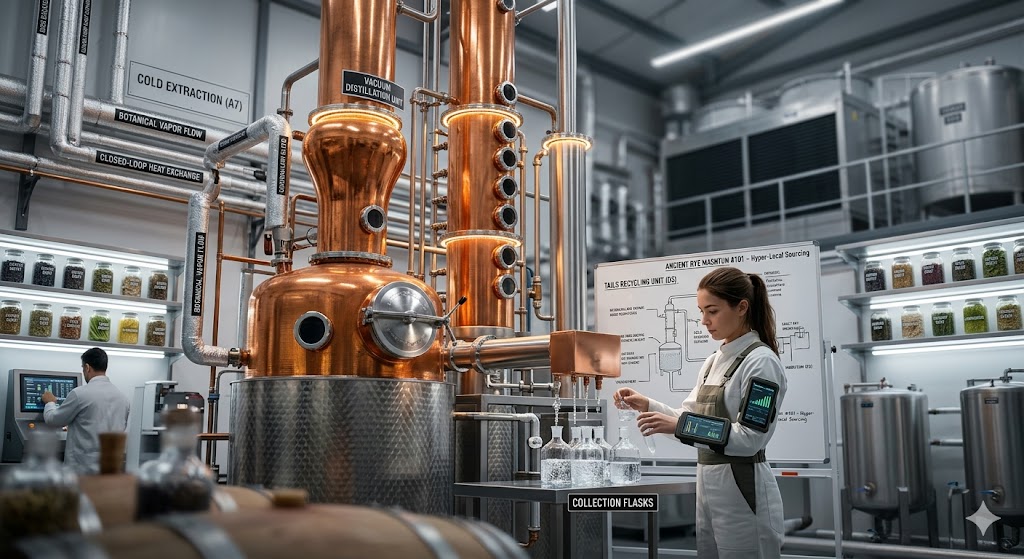
If brewing is an art and viticulture is a defense, distilling in 2026 is a masterclass in efficiency and extraction. The days of the "moonshine" aesthetic—shabby copper stills in dusty basements—have been replaced by high-performance "Micro-Distilleries" that operate with the tactical precision of a pharmaceutical lab.
In this final chapter, we look at how spirits have moved toward a "Zero-Waste, Maximum-Flavor" model. It’s no longer just about the burn; it’s about the botanical blueprint.
The New Standard: "The High-Yield Craft"
The modern distillery is a closed-loop system where every calorie of heat and every drop of water is accounted for. The "no-fluff" approach here means stripping away traditional marketing "smoke and mirrors" to focus on the chemistry of the spirit.
Vacuum Distillation (Cold Extraction):
2026 has seen a surge in cold distillation. By lowering the pressure inside the still, distillers can boil alcohol at room temperature. This preserves the delicate, "bright" notes of fresh botanicals—like lemon peel or cucumber—that are usually destroyed by the harsh heat of a traditional pot still.
The "Head-to-Tail" Revolution:
Nothing is wasted. The "tails" of a run (the lower-quality spirit at the end) are now being re-purposed through advanced filtration or used as base spirits for sustainable, botanical-heavy liqueurs.
The Rise of Non-Traditional Grains:
Distillers are using "grit" to experiment with forgotten grains—rye, spelt, and ancient wheats—that require more effort to process but yield a depth of flavor that standard commercial corn or wheat simply can't match.