Part 2: The Resilience of the Vine
In 2026, the vineyard is no longer just a place of pastoral beauty; it is a frontline in the battle for agricultural survival. As climate volatility—ranging from erratic frosts to prolonged droughts—threatens traditional wine regions, the industry has responded with a "grit-first" approach known as Regenerative Viticulture.
The romance of the "winemaker's intuition" hasn't disappeared, but it has been reinforced by tactical data. In 2026, a great wine isn't just "made" in the cellar; it is "defended" in the field.
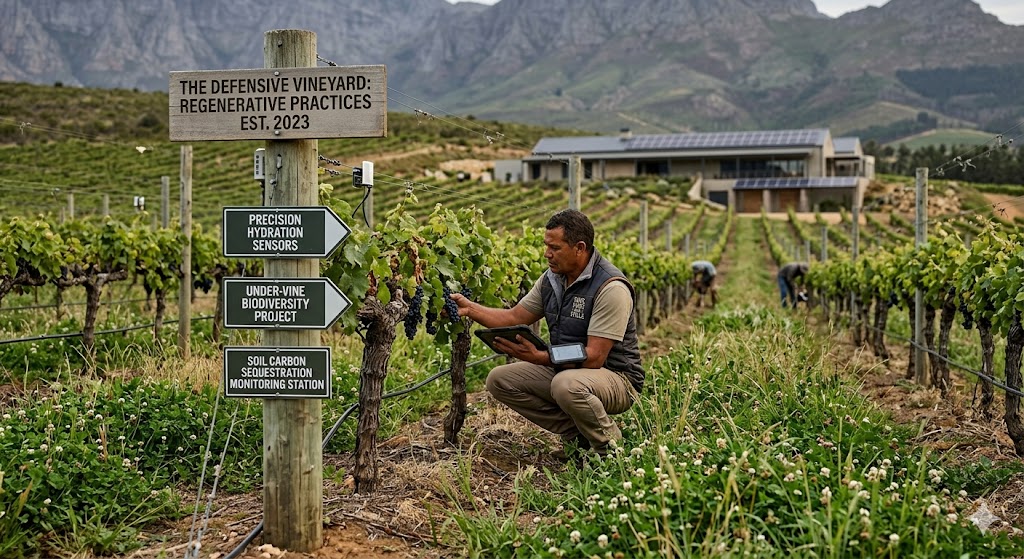
The New Standard: "The Defensive Vineyard" The most successful wineries today are those that have moved beyond sustainability (doing less harm) to regeneration (actively repairing the ecosystem). This is a high-tech, boots-on-the-ground effort to build resilience into the very soil.
Precision Hydration: With water scarcity becoming a tactical challenge, sensors now monitor sap flow in individual vines. Irrigation is no longer a "flood" approach but a surgical strike, delivering exact milliliters only when the vine’s biological data signals distress.
The Rise of "Under-Vine" Biodiversity: The pristine, bare-earth rows of the past are gone. Today’s vineyards are lush with cover crops—clover, legumes, and wild grasses—that act as a living "skin," moderating soil temperature and sequestering carbon.
The Emerging Terroir: We are seeing a bold expansion into "New North" regions. Countries previously considered too cold for viticulture are now producing award-winning sparkling wines and light reds, using heritage grape varieties that have been digitally mapped for their resilience to frost.