The Rise of the Secular Community Hub
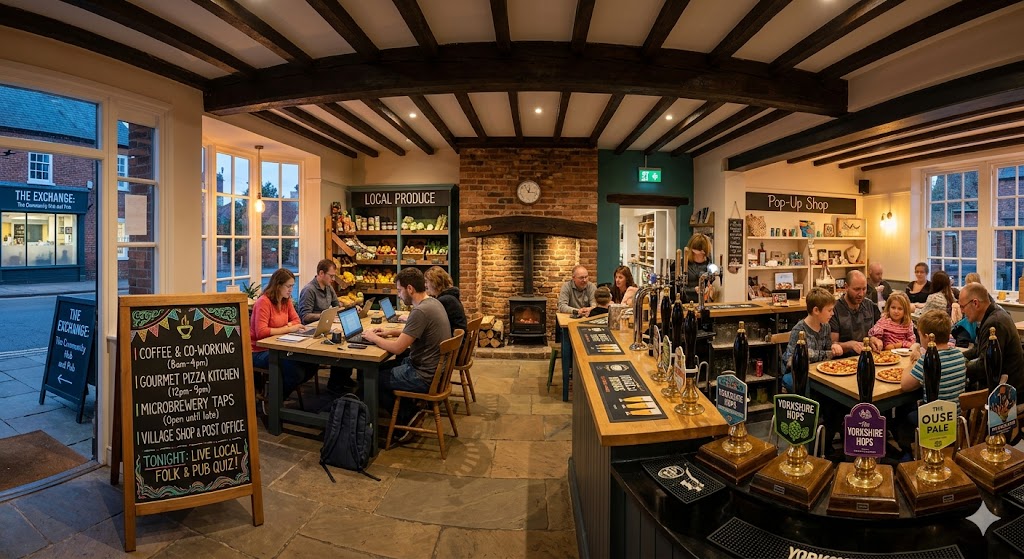
In our previous discussions, we explored how social media accelerated the decline of traditional pubs and how those same establishments are now fighting back by radically diversifying their services—becoming co-working spaces, post offices, and coffee shops, as beautifully seen in The Exchange. But the evolution of the British pub isn’t just about survival; it is about filling a profound void.
As banks, post offices, local council branches, and even high street shops vanish from our village cores, a new institutional form is emerging. The successfully diversified pub is moving beyond just offering services and is becoming something much more permanent and essential: the singular anchor of community identity.
The Final Evolution
The Micro-Village Hall If the diversified pub is the heart of the community, its final evolutionary step is to become the community’s brain. In many ways, the 21st-century pub is assuming the civic role traditionally held by the church or the village hall, but with better beer.
The Anchor of Local Governance
The implications are huge. As municipalities cut budgets and close satellite offices, the diversified pub is the logical inheritor of civic responsibility. It provides the space and the audience (the daytime coffee drinkers, the evening diners) for parish council meetings, local historical societies, and neighborhood planning workshops.
The pub’s unique strength is that it is already a curated, well-maintained, warm, and highly accessible space. In many regions, it is now the only such space remaining. By merging essential commercial functions (co-working, postal services) with vital civic functions (local governance, history archives), the 21st-century pub has established a resilient new model.
This isn’t just a pub fighting decline; it is the definitive institution for local community identity, rebirth, and survival. It is the new "Secular Community Lintel."